Sign In
Upcoming Event
 Free Newsletter

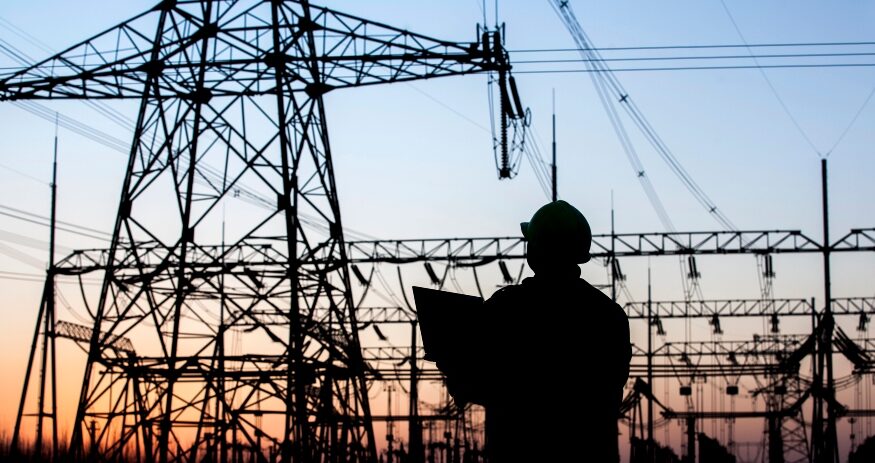
Clemson University has joined the NSF Grid Modernization Engine in the Carolinas, a regional initiative advancing next-generation electric grid technologies and energy resilience. (Photo/DepositPhotos)
Clemson University has joined the NSF Grid Modernization Engine in the Carolinas, a regional initiative advancing next-generation electric grid technologies and energy resilience. (Photo/DepositPhotos)
Clemson joins NSF Grid Modernization Engine
Ross Norton // July 16, 2026//


- Clemson University was named a founding partner in the NSF Grid Modernization Engine in the Carolinas.
- The initiative received an initial $15 million investment with the potential for up to $160 million over 10 years.
- Clemson’s Charleston Innovation Campus will test and validate next-generation grid technologies and energy systems.
- More than 100 partners will collaborate to improve grid reliability, energy resilience and workforce development.
The National Science Foundation today has made Clemson University a key player in its effort to modernize the nation’s electric grid.
Clemson was named a founding partner in the NSF Grid Modernization Engine in the Carolinas, one of the agency’s newest Regional Innovation Engines. Carolinas Grid Engine will develop, test, commercialize and deploy technologies that address one of the nation’s most pressing infrastructure challenges.
“Our state-of-the-art Dominion Energy Innovation Center at Clemson’s Charleston Innovation Campus boasts the infrastructure, technical expertise and testing capabilities needed to address complex energy challenges and innovate next generation grid technologies,” Cole Smith, Clemson University executive vice president for academic affairs and provost, said in a news release. “We are an eager partner with the Carolinas Grid Engine to strengthen those capabilities while supporting the applied research necessary to advance modern energy systems.”
The engine’s purpose is to accelerate adoption of solutions that improve grid reliability, strengthen domestic supply chains and help the United States meet rapidly growing electricity demand driven by artificial intelligence, advanced manufacturing, data centers and population growth, the university says. The award includes an initial $15 million investment over two years, with the potential for up to $160 million over the next decade based on performance milestones. Led by the University of North Carolina Charlotte, Carolinas Grid Engine core partners include Clemson, the South Carolina Research Authority, York Technical College, Joules Accelerator and E4 Carolinas, along with more than 100 public and private partners that will support the project.
Clemson’s Charleston Innovation Campus will support the development, validation and testing of grid-enhancing technologies, smart and hybrid transformers, grid inverters, energy storage systems and other emerging technologies designed to deliver electricity across the grid more safely, reliably and cost-effectively, the release stated.
“A reliable and resilient energy supply is critical to South Carolina’s continued success,” said S.C. Gov. Henry McMaster said in the release. “This award will help strengthen our ability to meet future demand, support economic opportunity and ensure the Carolinas remain leaders in innovation and job creation. We are proud to celebrate the partners who helped secure this award and grateful for the strong collaboration across the Carolinas that made it possible.”
Housed at Clemson’s Dominion Energy Innovation Center in Charleston, the Duke Energy eGRID can emulate the electrical grid of any region in the world, allowing real-world testing of emerging energy technologies. A new mobile grid emulator called EDGE will more than double the center’s power-rating capabilities and allow for on-location testing anywhere in the Carolinas. EDGE, secured with funding as part of the SC NEXUS for Advanced Resilient Energy technology hub, is a high-powered grid simulator on wheels.
“The announcement of the NSF Grid Modernization Engine in the Carolinas as one of the elite NSF Regional Innovation Engines is more than a recognition of technical excellence, it is a validation of the strategic investments made by the federal government, the state of South Carolina and industry partners to strengthen our energy future,” Secretary of Commerce Harry Lightsey III said in the release. “Building on the foundation established through SC NEXUS and our state’s world-class energy assets, this effort positions the Carolinas as a national leader in grid modernization, energy resilience, workforce development and innovation.”
In addition to EDGE, Clemson is adding a walk-in thermal chamber at its eGRID facility that will allow technologies to be tested at varying temperatures and humidity levels, said Ramtin Hadidi, co-chief technology officer of the Carolinas Grid Engine and an associate professor of electrical and computer engineering at Clemson.
“This is critical for utilities and system operators because these technologies must be designed and validated to be deployed anywhere in the country and succeed in any climate,” Hadidi said.
Spanning a 36-county region, the NSF Grid Modernization Engine in the Carolinas brings together more than 100 universities, utilities, manufacturers, entrepreneurs, workforce organizations, investors, economic development organizations and state and local governments to create a nationally significant innovation ecosystem for grid modernization, the release stated. In addition to Clemson and other core partners, collaborators include Duke Energy, Dominion Energy, Santee Cooper, EPRI, Siemens Energy, Honeywell, Nucor and the North and South Carolina Departments of Commerce.
The NSF Engines program forms a connected national network that supports large-scale regional partnerships focused on accelerating the development and deployment of critical technologies, growing regional economies and strengthening America’s global competitiveness. Carolinas Grid Engine is one of only 12 engines selected from nearly 300 teams that entered the national competition.
g