Sign In
Upcoming Event
 Free Newsletter

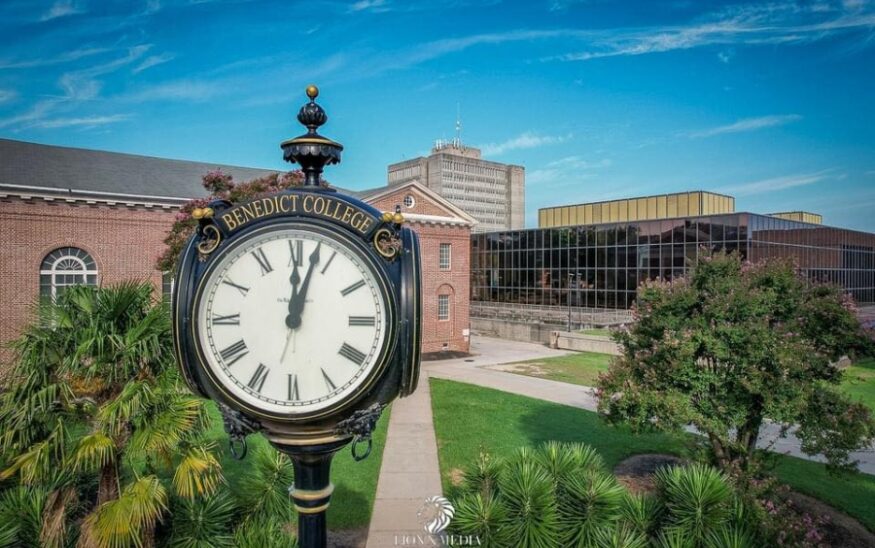
Goodwill Industries of Upstate/Midlands South Carolina has partnered with Benedict College’s Women’s Business Center to expand opportunities for aspiring entrepreneurs through the NxLevel Business Accelerator Program. (Photo/Benedict College)
Goodwill Industries of Upstate/Midlands South Carolina has partnered with Benedict College’s Women’s Business Center to expand opportunities for aspiring entrepreneurs through the NxLevel Business Accelerator Program. (Photo/Benedict College)
REPORT: Benedict College in Columbia has $79M economic impact


A report from a national organization has revealed Benedict College’s economic impact on the Midlands region.
United Negro College Fund, the nation’s largest minority education organization, recently unveiled its 2024 HBCU Economic Impact Report, showing that Benedict College generates $78.7 million in total economic impact to Columbia’s and the Midlands’ economies, according to a news release.
The report, “Transforming Futures: The Economic Engine of HBCUs,” commissioned by UNCF’s Frederick D. Patterson Research Institute, is a comprehensive, data-driven analysis highlighting the substantial contributions that historically Black colleges and universities (HBCUs) make to their students, local communities and the nation.
“Benedict College has been a longstanding UNCF-member institution, and our economic impact on the nation’s economy is undeniable,” said Roslyn Clark Artis, president and CEO of Benedict College. “The College generates 723 jobs and for each job created on campus, another 1.2 public and private-sector jobs are created off campus because of Benedict College related spending.”
HBCUs have long been pillars of educational excellence and economic engines, driving prosperity across the nation, the release stated. Despite these contributions, chronic underfunding threatens their ability to maintain this high level of impact. Additionally, HBCUs like Benedict play a major role in the economic success of our graduates by enhancing their education, training and leadership skills. The total earnings of Benedict’s 2021 graduates is $434.9 million, which is 80% more than they could expect to earn without their college credentials.
Related: Ritedose, Benedict College partner on workforce education pipeline
Related: $1M funding boost to expand Midlands Technical College’s trades program
“Transforming Futures: The Economic Engines of HBCUs” underscores the urgent need for equitable and sustainable funding to ensure HBCUs can continue their vital role in promoting social mobility and economic growth and calls on the public to advocate for these essential institutions.
“As UNCF observes its 80th anniversary, one of the highlights of our yearlong celebration is the release of the sequel to our groundbreaking 2017 report,” said Michael L. Lomax, president and CEO, UNCF, in the release. “This report reaffirms what we have always known about the resilience of HBCUs: despite a deadly pandemic, social unrest caused by the murders of George Floyd and Breonna Taylor, and the economic uncertainties of the past seven years, HBCUs continue to do more with less — not only in preparing the next generation of leaders but also in contributing to our nation’s economic impact.
“At this critical moment, with a crucial election on the horizon, we all must immediately actualize our commitment to these cornerstone institutions.”
Click here to view the full report.
s