Sign In
Upcoming Event
 Free Newsletter

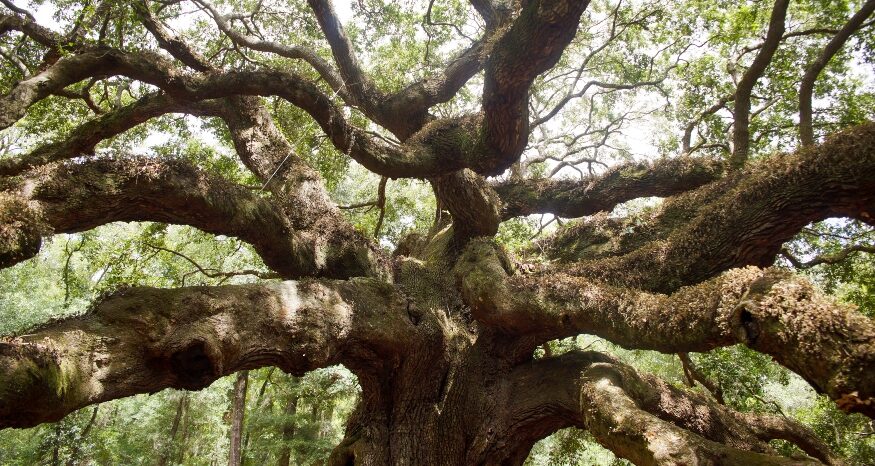
The Angel Oak on Johns Island has become the first tree in South Carolina to be individually listed on the National Register of Historic Places. (Photo/Lowcountry Land Trust)
The Angel Oak on Johns Island has become the first tree in South Carolina to be individually listed on the National Register of Historic Places. (Photo/Lowcountry Land Trust)
Angel Oak added to National Register of Historic Places
Hollie Moore // June 25, 2026//


- The Angel Oak has been added to the National Register of Historic Places.
- It is the first tree in South Carolina to be individually recognized on the register.
- The Johns Island landmark is estimated to be about 400 years old and shades 17,000 square feet.
- The designation highlights the site’s connections to Indigenous communities, Gullah Geechee history, Civil Rights leaders and local culture.
The National Park Service has added a Lowcountry wonder to its list of historic places, marking it as the first in South Carolina.
The Angel Oak will be on the National Register of Historic Places, the first time a tree in South Carolina has been individually recognized on the register.
“This designation validates what many people have understood about the Angel Oak for generations: it is a place where history, culture, nature and community intersect,” Matt Williams, president and CEO of Lowcountry Land Trust, said in a news release. “This process helped us better understand the significance of the site and informed the intentional design of the future Angel Oak Preserve. Our goal is to create an experience that honors the many stories connected to this landscape while inspiring future generations to value and protect the places that make the Lowcountry unique.”
Through generations, the Johns Island Angel Oak has stood as history unfolded with indigenous communities, plantation-era life, Reconstruction and the Civil Rights Movement. The tree is estimated to be about 400 years old and shades 17,000 square feet, according to the Charleston SC website.
“The Angel Oak has been a beloved part of the Lowcountry for centuries and is one of the most iconic places in our region,” Charleston Mayor William Cogswell said in the release. “This tree is a living piece of American history, and its listing on the National Register of Historic Places is well deserved. I encourage everyone to visit, learn about its history, and appreciate the significance it holds.”
The tree has been preserved with the help of Lowcountry Land Trust, a land and water conservation nonprofit, and the city of Charleston, which have partnered to permanently protect the tree and its 44-acre landscape.
The research connects the site to Indigenous communities, the lives of enslaved people on the former Angel Plantation, Gullah Geechee farmers and families on Johns Island, frequent visits by Civil Rights leaders such as Septima P. Clark and Esau Jenkins, and non-segregated community gathering, recreation, and learning beneath the tree’s expansive canopy.
Additionally, in July of 2025, the Angel Oak Preserve was named a community forest by the Old-Growth Forest Network, a compilation of the oldest known forests in the United States.
“The National Register of Historic Places recognizes places that help tell the story of our nation,” Virginia Harness, architectural historian and National Register co-coordinator with the South Carolina State Historic Preservation Office, said in the release. “The Angel Oak’s listing acknowledges the generations of people connected to this site and highlights its importance as a centerpiece of local culture and history. This recognition helps raise awareness of the site’s significance and encourages continued stewardship for future generations.”
s