Sign In
Upcoming Event
 Free Newsletter

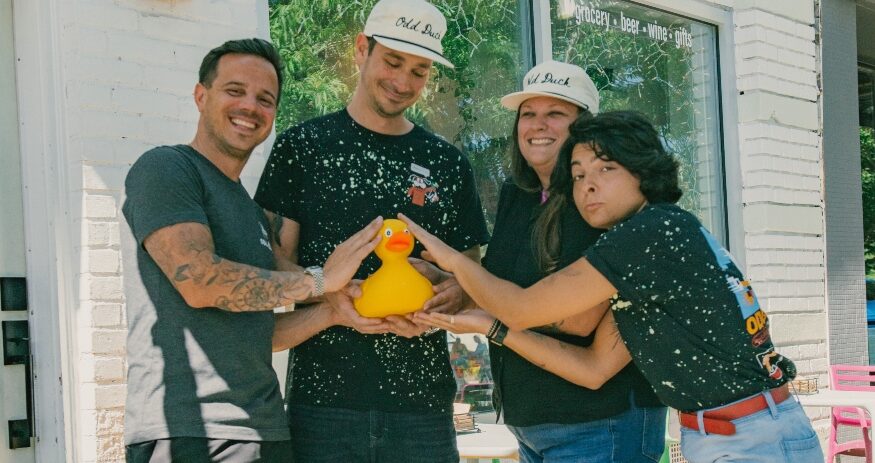
Jared Hellman and Andrew Hare started Old Duck after first pursuing separate careers elsewhere. (Photo/Old Duck)
Jared Hellman and Andrew Hare started Old Duck after first pursuing separate careers elsewhere. (Photo/Old Duck)
Odd Duck growth reflects momentum in state’s startup ecosystem
Hollie Moore // May 4, 2026//


- Odd Duck expands to three Lowcountry locations including Charleston and Summerville
- Founders Jared Hellman and Andrew Hare bring hospitality and tech experience
- Concept blends upscale bodega, cafe and local products
- Growth reflects broader momentum in South Carolina’s startup ecosystem
Jared Hellman and his business partner, Andrew Hare, knew each other since junior high school. They grew up together in Hilton Head, a hotspot for the state’s hospitality industry.
The pair spent about 15 years in separate careers, Hellman in the tech industry and Hare operating his own business, Vertical Roots, for hydroponic container farming.
But before moving into separate fields, Hellman and Hare co-owned a deli in downtown Charleston when they were in their 20s. Today, they are taking a second run at the venture with three Lowcountry locations.
Startup Odd Duck is reaching into multiple neighborhoods of the Charleston area to establish a business fueled by local products that appeal to Lowcountry tastes.
“Personally, I think we were both motivated to get away from screens, and do something a bit more in the ‘real world,’” Hellman said. “As far as the concept, we were inspired by New York City corner store bodegas that are able to provide a community third space and a great cafe component with a cool assortment of goods. We wanted to do an upscale version of that.”
The team began with a location in Park Circle in July 2023. This year, they had an opportunity to expand into two new spaces, one downtown and one in Summerville. Hellman says each location will vary slightly based on local demand, Park Circle being more residential and suburban and downtown Charleston’s needs looking a bit more urban.

Hellman said from their first day with Odd Duck, the priority was quality over quantity, noting you can only scale with a good team of people and consistent cash flow. At the original Park Circle location, 10 of the 15 employees have been at the market for over a year, one of Hellman’s markers of success.
“If you have a concept you’re married to, you want to be careful what market you go into because if there are already a ton of them, you don’t want to face grueling competition,” Hellman said. “I also think being good owners and operators and taking care of your people is important.”
To soon have the startup in three Lowcountry locations, as well as a prep kitchen in North Charleston, Hellman and Hare are no strangers to what it looks like to grow a new business.
Hellman said each municipality has varied, but Summerville, for example, was a very pro-business, growth-minded city to expand into. Mayor Russ Touchberry checked in with the pair to ensure they had everything they needed to put the project into motion. They made an 1800s house into an operational enterprise in less than four months.
“Summerville’s a little bit different and it’s a small-town energy. They don’t want to be a suburb of Charleston; they want to be their own town,” Hellman said. The grassroots marketing approach is a bit different. You join the chamber of commerce, maybe you sponsor Little League, and you find out who is important in the community and make an effort to reach out to them.”
For startup businesses such as Odd Duck, support plays a key role in being able to thrive in differing South Carolina markets. Regional organizations such as Lowcountry Local First, StartupGVL, Boyd Innovation Center, and many others, work exclusively to see success in local regions of the state.
Boyd Innovation Center focuses primarily on scalable technology companies, which can range from a smartphone app and drone software to cyber-security technology and rural health services.
Boyd Executive Director Sam Herskovitz was originally from California, beginning his career path for about 12 years at a startup out of Los Angeles that was eventually purchased by ADP Payroll Services. He played a role helping a couple of smaller startups before an opportunity with Boyd Innovation Center.
“I just always really loved the scrappy startup, zero to one, figure it out, get stuff done, build-something-of-value stage,” Herskovitz said.
Herskovitz’s wife is originally from Columbia, where they currently live. After a few years in Charleston, Herskovitz returned to Columbia with an opportunity to lead the Boyd Innovation Center.
To Herskovitz, cyber-security has seen a huge growth statewide with different defense operations and insurance businesses, at a rate similar to that seen artificial intelligence and energy technology.
He said another large player is medical technology, which can be rural health, medical devices and the biotechnology industry. Universities such as Clemson and MUSC create a natural hub for statewide growth.
Boyd welcomes all companies in the state that are willing to commute to events and gatherings in Columbia, but is primarily supporting Midlands startups with a couple in Fort Mill and Lancaster.
Boyd’s primary focus is getting tech startups in their beginning stage from $0 to $100,000 in annual revenue.
“Technology companies focus more on value creation than on head count,” Herskovitz said. “The primary concern is not on job creation, though one of the side benefits of making a valuable technology company is that it produces high-paying jobs.”
Herskovitz said generally speaking South Carolina is business friendly, with leadership that is interested in startups and new technology. He credits some of the success of Columbia startups to the fact that even as Columbia and other state regions are growing and becoming well-known cities, they are still small enough to get access to people who want to help you succeed. It’s a big change from Los Angeles, he says.
On the flip side, launching a company in South Carolina does lend itself to specific challenges as well, one being access to capital. Herskovitz said the state is still a bit fresh in that way but he sees more venture capital sources popping up as entrepreneurship grows.
“Investment capital follows good businesses so the more that we can help produce good quality businesses the more outside capital will find its way here,” Herskovitz said. “So I think one of the best things we can do is just create an environment where there’s a density of successes and wins that bring more and more attention from outside capital.”
e