Sign In
Upcoming Event
 Free Newsletter

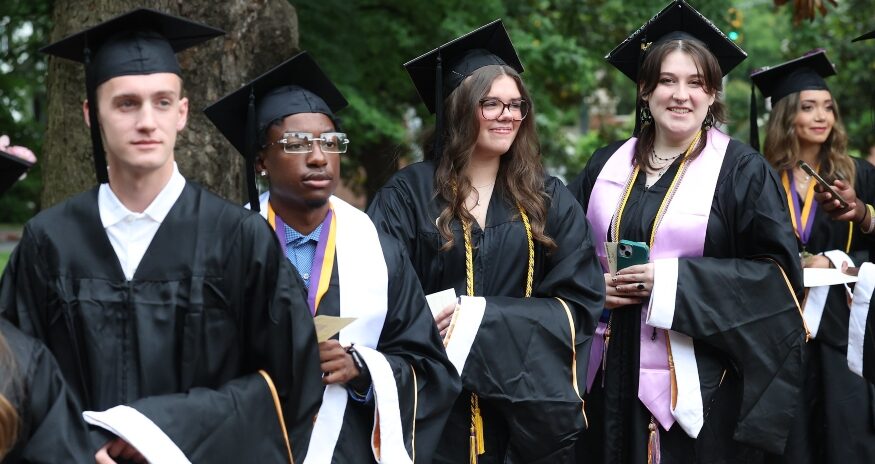
Converse University graduates record-breaking class in 2025, marking its first co-ed commencement since admitting men and navigating pandemic-era changes. (Photo/Converse University/John Byrum)|Converse University graduates record-breaking class in 2025, marking its first co-ed commencement since admitting men and navigating pandemic-era changes. (Photo/Converse University)|Four years after admitting men to its undergraduate programs, Converse University graduated its largest-ever class. (Photo/Converse University/John Byrum)|Rep. James Clyburn, long-serving congressman from South Carolina's 6th District, delivered the keynote address. (Photo/Converse University/John Byrum)
Converse University graduates record-breaking class in 2025, marking its first co-ed commencement since admitting men and navigating pandemic-era changes. (Photo/Converse University/John Byrum)|Converse University graduates record-breaking class in 2025, marking its first co-ed commencement since admitting men and navigating pandemic-era changes. (Photo/Converse University)|Four years after admitting men to its undergraduate programs, Converse University graduated its largest-ever class. (Photo/Converse University/John Byrum)|Rep. James Clyburn, long-serving congressman from South Carolina's 6th District, delivered the keynote address. (Photo/Converse University/John Byrum)
Converse University celebrates historic graduation class


- Converse graduates largest class in school’s 136-year history
- First co-ed class celebrates commencement after 2020 policy shift
- Congressman Jim Clyburn delivers keynote address
- Graduates overcame pandemic and leadership transitions
Converse University graduated the largest number of students in the school’s 136-year history during commencement exercises held May 17, four years after making the decision to admit men to the formerly all-women’s college.

Among the record 222 undergraduates receiving degrees during ceremonies at Twichell Auditorium were 80 graduating with academic honors and a Fulbright Scholar. The class of 2025 entered as freshmen in 2021-2022, the academic year the university made the decision to accept men for the first time and in the middle of a global pandemic that challenged government, businesses and higher education institutions worldwide.
The Converse Board of Trustees decision in 2020 to accept male students signified a significant transition for the private college, which also saw three presidents serve in leadership roles since that time. The board approved men as residential students for the fall of 2021, though they were already attending as online students. The first men graduated from Converse in 2022 with the first freshmen who entered the school graduating in 2024.
During the May commencement ceremonies, President Boone J. Hopkins, Ph.D, alluded to the transformative era the students entered when they stepped onto campus four years ago, when male students were introduced to the university and every student had to display a green checkmark to ensure they were monitoring their COVID-19 exposure.
“You are an incredible group of individuals,” Hopkins said. “You have risen above challenges with courage and conviction, but you have also navigated your time here with grace and an unwavering enthusiasm that has truly transformed our campus.”
For more than a century, the private college in Spartanburg was one of a handful of women-only institutions of higher learning in the nation. College of all sizes experienced upheaval in the post-pandemic world, and small colleges in South Carolina have not been immune to shifting demand for students and a state and nation with low unemployment where college has become a secondary option for many.

Limestone College in Gaffney, another small private college in South Carolina, shocked students, faculty and alumni this spring by suddenly announcing that this year’s graduating class would be its last as it was closing after 180 years.
Converse’s leadership seemed to anticipate a need to institute a plan of change when it made the decision to admit men, a decision that came after making national news years before for significantly reducing tuition as universities were raising rates.
As friends and family looked on, male students sat side-by-side with female students in Twichell Auditorium as their names were called to receive their college degrees, a significant change from the university’s founding in 1889 when Dexter Edgar Converse urged a group of men to support founding an all-women’s college in the Upstate of South Carolina. Converse saw the need for higher education for women because he wanted a place his daughter could receive the same opportunity for higher learning as men.
Linda Layman Redding, chair of the Converse Board of Trustees and a 1988 graduate, also spoke of the graduating class in terms of transformation as she urged them to be confident and to trust their voice as they go out into the world.
“You have also learned a lot about yourself and what it means to be a transformative leader and world citizen in the 21st century that has been taught to see clearly, decide wisely and act justly,” Redding said.
Congressman Jim Clyburn (D-SC), keynote speaker for the class of 2025 who has represented the Sixth Congressional District since 1993, spoke to the graduates about the value of potential and the possibilities represented by their commitment.
Clyburn recalled growing up in Sumter during the years when the specter of polio created debilitating fear across the nation, when children weren’t allowed to play outside for very long. He said one of his childhood friends died from polio and another suffered lifelong physical impairment. He also spoke of soldiers dying on far-off battlefields during that time because no one knew how to store blood safely to get it to wounded soldiers.
He said both of those things changed when Jonas Salk and Albert Sein developed a polio vaccine and when Dr. Charles Drew developed a method for reliably storing blood, which resulted in life-saving measures that allow for today’s blood transfusions. Clyburn said that because these three saw a challenge where others saw despair, they were able to “opened up some secrets” and change lives across the world forever.
“Nobody today is going to refuse to take a polio vaccine because the guys who came up with the cure happened to have been born white,” Clyburn said. “Nobody is going to refuse a blood transfusion today because Charles Drew happened to have been black.”
Both of Clyburn’s parents died of cancer, including his mother when she was 55. His wife, Emily, died in 2019 from diabetes. He said the potential to find cures for such diseases resides in college students, waiting for them discover what’s possible inside of them.
“We need and we look for people like these graduates to open up some secrets,” Clyburn said. “I have no idea who sits before me. What I know, that within each and every one of you are possibilities that could raise the level of consciousness, that could open up some secrets, that could very well give us the cure for some crippling disease.”
Clyburn emphasized that where someone was born or the color of their skin matters little when life-changing breakthroughs ripple across centuries, starting in places like Spartanburg.
“We want you to be your best,” Clyburn said. “We want you to make the kind of contributions that will make all of us pleased that you came this way. That’s what this is all about.”
Andy Owens is a freelance writer and former journalist.
F