Sign In
Upcoming Event
 Free Newsletter

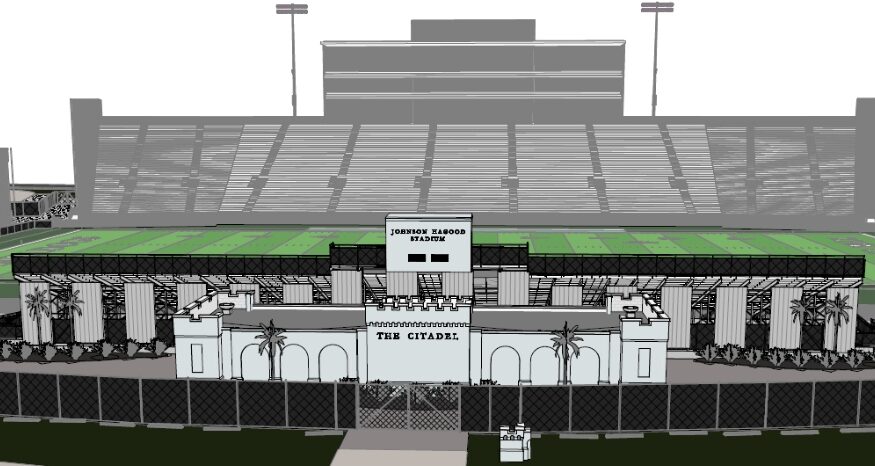
Chip Crane, president and CEO of Hill Construction, has spent more than two decades helping guide the Lowcountry contractor’s growth while maintaining its focus on client relationships and community-based projects. One recent project is the Johnson Hagood Stadium at The Citadel. (Rendering/Hill Construction)
Chip Crane, president and CEO of Hill Construction, has spent more than two decades helping guide the Lowcountry contractor’s growth while maintaining its focus on client relationships and community-based projects. One recent project is the Johnson Hagood Stadium at The Citadel. (Rendering/Hill Construction)
Chip Crane’s journey up the Charleston construction industry ladder
Hollie Moore // June 8, 2026//


- Chip Crane has spent 26 years building his career at Hill Construction in Charleston
- Hill Construction focuses on commercial projects across Charleston, Berkeley and Dorchester counties
- About 80% of the firm’s work comes from repeat clients throughout the Lowcountry
- Crane said collaboration and networking have helped shape Charleston’s construction industry
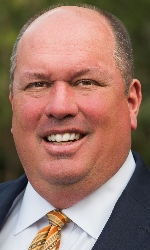
“Work hard and be good,” might sound simple, but Chip Crane said it is pretty key for both life and career success.
After 26 years working his way up the Lowcountry construction ladder, Crane serves as president and CEO of Hill Construction, which specializes in commercial pre-construction, design and building services, construction management, and general contracting.
“There is no substitution for hard work, in construction especially,” Crane said. “I think sometimes people try to find a way to get around something, but to me, success will follow those who work hard.”
He was a member of the SCBIZ inaugural class of the SC500.
After entering the industry in Lowell, Mass., for a real estate developer, he worked as an architectural draftsman. The job sparked an interest in going to school for architecture at The Catholic University of America followed by earning his master’s degree in construction from the University of Illinois.
After completing school, Crane worked for construction companies in the Northeast for about 11 years, focused around the Boston area. Hill Construction offered Crane a position as a preconstruction services manager in Charleston in 2000, transferring his homebase to the Lowcountry.
Though he noticed the likenesses of the two regions, Crane has found a community in the Lowcountry that he wasn’t exposed to in Boston. Crane said greater Charleston’s construction community works together to see one another succeed.
“Charleston has been a great fit for me. It has a lot of similarities to Boston in terms of culture and feel, and of being a coastal port city,” Crane said. “I love the camaraderie in our industry, and I’m good friends with most of the people that we compete with for work. Charleston is much more collegial than it is competitive.”
After 10 years working as a manger and then director in preconstruction for the company, he was promoted to vice president of business development, where he served for nearly nine years before accepting his current position of seven years.
Looking back at his career, Crane credits networking with local industry peers as one of his keys to success. In his first 10 years in Charleston, he said the industry was growing with strong opportunities to develop personal and professional relationships in the field.
After 70 years in business, the firm is made up of almost entirely Lowcountry and Pee-Dee projects, hugging the South Carolina coast. Crane considers the company a “traditional Lowcountry construction firm” with about 18 to 20 projects going on at one time, a majority based in Berkeley, Dorchester and Charleston counties.
With about 80% of the companies’ projects being repeat clients, Crane said it allows for the team to count on its past successes to bolster more success. Most projects, both public and private, are buildings made to support a growing community — projects such as churches, amenity centers, office space and parks.
“It’s super important to us that our employees can go home and sleep in their own beds,” Crane said. “So that shapes how we craft our staff and how we continue with the quality of service people have come to expect from Hill Construction.”
Yet as population grows, there is a shift in the construction landscape in Charleston. Crane said he has watched national firms move in and the quantity of projects expand. Nonetheless, Crane thinks the market can support all the firms currently working in the Lowcountry.
A partner in the business, Crane works alongside three other leaders: Gene Garrett, chief operating officer and project manager; Bart Bodkin, senior vice president and project manager; and Ted Chestnut, director of preconstruction.
“We have purposefully made the decision to not get all the work we could get and add a bunch of new employees,” Crane said. “We like the size that we are because we can manage it, and we find that it allows us to maintain the level of service for the repeat clients.”
C