Sign In
Upcoming Event
 Free Newsletter

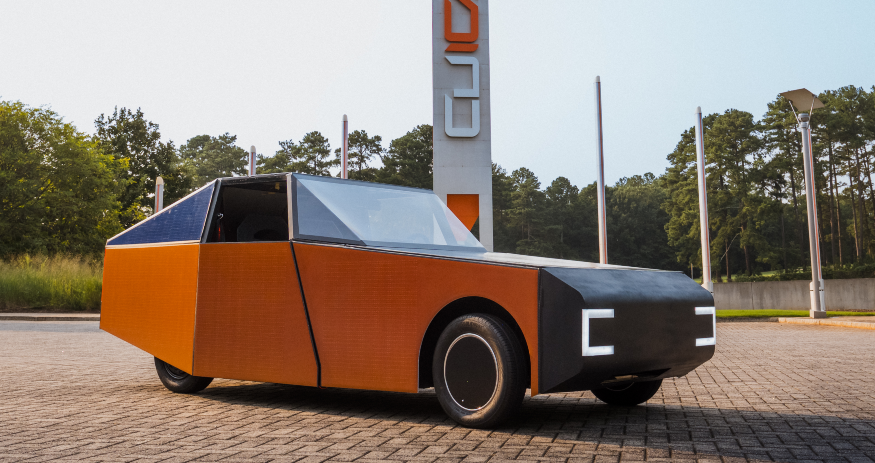
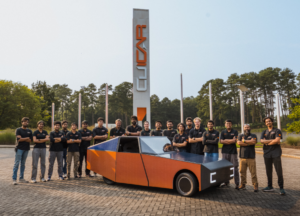
Clemson University graduate students developed Deep Orange 17, a solar-integrated electric vehicle prototype created in collaboration with BMW. (Photo/Clemson University)
Clemson University graduate students developed Deep Orange 17, a solar-integrated electric vehicle prototype created in collaboration with BMW. (Photo/Clemson University)
Clemson unveils solar-powered Deep Orange 17 EV
Ross Norton // August 11, 2026//


- Clemson University unveiled Deep Orange 17, a solar-integrated electric vehicle prototype developed with BMW.
- More than 1,700 photovoltaic cells are integrated into the vehicle to generate energy while parked and driving.
- The 1,212-pound prototype produced an average of 31 miles of surplus driving range from a 12-mile daily commute.
- Research on the vehicle will continue at Clemson’s CU-ICAR, with the prototype scheduled for the 2027 Consumer Electronics Show.
Clemson University has unveiled Deep Orange 17, a solar-integrated, energy-positive electric vehicle prototype designed to generate more energy than it consumes during a typical day of urban commuting. Developed in collaboration with BMW’s research and development team, the prototype integrates solar technology, lightweight engineering and intelligent vehicle controls to demonstrate that energy-positive mobility is possible.
Deep Orange 17 is the latest concept vehicle developed through Clemson’s Deep Orange program, where graduate automotive engineering students design, engineer and build a fully functional prototype alongside industry partners.
In the fall of 2024, BMW challenged the graduate students of Deep Orange 17 to rethink one of the industry’s biggest questions: Could a vehicle generate more energy than it consumes during everyday driving?
Rather than optimizing solely for standardized driving cycles, the team focused on how people actually use their vehicles every day, according to a news release. Passenger vehicles spend most of their time parked, creating opportunities to harvest solar energy throughout the day. Students also designed the vehicle to capture solar energy while driving, allowing sunlight to become a continuous source of energy generation during everyday use.
The result is Deep Orange 17, a lightweight, solar-integrated coupe designed to generate more energy than it consumes during a typical day of urban commuting. Designed around drivers who value ease of driving, energy efficiency and reduced dependence on charging infrastructure, the vehicle represents a new approach to sustainable mobility, according to the team.
“This is a project we’ve wanted to pursue for years, so it’s incredibly rewarding to see this group of students come together over the last two years, overcome so many technical challenges and constraints, and bring an energy-positive vehicle to life,” Stephan Augustin, project manager of research and new technologies at BMW, said in the release.
At the heart of Deep Orange 17 is a fully integrated solar energy system. Rather than serving as an auxiliary feature, solar power is a core part of the vehicle’s propulsion strategy.
More than 1,700 photovoltaic cells are integrated directly into the vehicle’s exterior surfaces, allowing the body itself to harvest energy while both parked and in motion. The system continuously replenishes the vehicle’s energy storage using sunlight, helping offset energy consumed during daily driving, the release said.
Developed in collaboration with the Fraunhofer Institute for Solar Energy Systems ISE, the solar panels use an innovative construction that continues generating power even when portions of the panels are shaded, according to the release. They are protected by a durable outer film featuring a distinctive color created through an advanced laser manufacturing process.
To evaluate real-world performance, students modeled environmental conditions and sunlight availability in Greenville; Frankfurt, Germany; Madrid, Spain; and Mumbai, India. Assuming a daily commute of 12 miles, the vehicle generated enough surplus solar energy to provide an average of 31 miles of additional driving range across all four locations.
Generating more energy than the vehicle consumes required more than solar panels alone. Students approached every aspect of the vehicle with efficiency in mind, from aerodynamics and lightweight construction to power electronics and drivetrain controls.
Weighing 1,212 pounds, Deep Orange 17 is approximately one-fourth the weight of many similarly sized production vehicles. Its multi-material chassis combines structural steel for passenger safety with aluminum components, carbon fiber structural members and 3D-printed metal joints to maximize strength while minimizing mass.
The vehicle’s exterior draws inspiration from the aerodynamic characteristics of the boxfish, the release stated, whose streamlined body naturally reduces drag while maintaining interior volume. That biomimetic approach, paired with retro-modern styling, helped students create a vehicle that is both visually distinctive and highly efficient.
Additional technologies, including regenerative braking, intelligent torque distribution and optimized drivetrain controls, work together to maximize energy recovery and improve overall vehicle performance.
“This was an incredibly challenging project — not only to create a working energy-positive prototype, but to demonstrate how a vehicle can become increasingly energy independent through solar integration,” Harsh Manghnani, Deep Orange team member and solar integration lead, said in the release. “Seeing our initial research and design validated in a working prototype has been incredibly rewarding.”
BMW challenged the Deep Orange team to prove that efficiency doesn’t have to come at the expense of emotional design.
The result is a two-door coupe inspired by BMW’s design heritage while embracing a distinctly modern identity. The model name Luminetta reflects both the vehicle’s solar-powered capability and its retro-modern design heritage, the release stated.
Inside, the vehicle features a custom human-machine interface that provides real-time vehicle telemetry alongside familiar technologies including Apple CarPlay and Android Auto, creating a connected driving experience that balances innovation with everyday usability.
While Deep Orange 17 showcases a new approach to sustainable mobility, it also demonstrates the educational model that has made Clemson’s Deep Orange program a leader in experiential engineering education, according to the university.
Unlike traditional engineering projects, Deep Orange immerses graduate students in the complete vehicle development process. Students conduct market research, define customer needs, develop vehicle concepts, engineer major systems, manufacture components and validate performance, all while working alongside industry engineers and managing real-world budgets, schedules and technical constraints.
The result is a holistic, end-to-end vehicle development experience that integrates powertrain engineering, vehicle controls, manufacturing, body design, software and emerging technologies into a single collaborative project.
“It’s rare for a master’s student to have the opportunity to experience the complete process of developing a prototype vehicle,” said Anshul Karn, Deep Orange project manager. “Many engineering programs include courses in areas like digital modeling or marketing, but very few give students the opportunity to begin with a vision, work through the entire development process and ultimately deliver a fully functioning prototype. That experience is what makes Deep Orange so unique.”
The 16 students who developed Deep Orange 17 graduated on Aug. 7 with Master of Science degrees in automotive engineering, but Deep Orange Program Director Greg Mocko believes they’ll enter the workforce with far more than a diploma.
“I think once the project is complete and the students have had some time to reflect, they’ll truly appreciate what they’ve accomplished and how much they’ve grown — not only as engineers, but also as individuals and as a team over the past two years,” Mocko said in the release.
Research on the prototype will continue at the Clemson University International Center for Automotive Research in Greenville, where the vehicle will serve as a platform for continued innovation in sustainable mobility, the university said. Deep Orange 17 is also scheduled to be featured at the 2027 Consumer Electronics Show in Las Vegas.
r