Sign In
Upcoming Event
 Free Newsletter

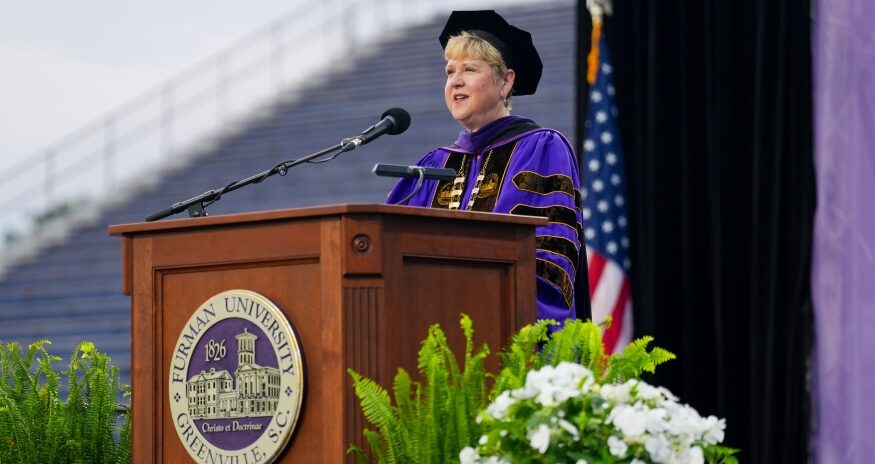
Furman University President Elizabeth Davis will retire in 2027 after leading the Greenville institution for 12 years and overseeing its bicentennial celebration and record fundraising campaign. (Photo/Furman University)
Furman University President Elizabeth Davis will retire in 2027 after leading the Greenville institution for 12 years and overseeing its bicentennial celebration and record fundraising campaign. (Photo/Furman University)
Furman President Elizabeth Davis reflects before retirement
Hollie Moore // July 31, 2026//


- Furman President Elizabeth Davis will retire in 2027 after leading the university for 12 years.
- The university is celebrating its bicentennial and the successful completion of its more than $500 million Clearly Furman campaign.
- Davis highlighted initiatives including The Furman Advantage, Pathways and On Discourse as key parts of her legacy.
- She reflected on leading through COVID-19, Hurricane Helene and the evolving challenges facing higher education.
Born in Louisiana, a career built in Texas and completed in South Carolina, Elizabeth Davis has spent her life navigating the landscape of higher education in the South.
After 22 years with Baylor University, she left her role as executive vice president and provost to accept a position at Furman University.
Now, as president of the Greenville private school for the past 12 years, Davis is reflecting on her career in higher education and what she hopes to see in her future as well as Furman’s. She will retire in 2027.
“This year is going to be fun because we are still celebrating our bicentennial and we are wrapping up the most successful campaign in Furman’s history, Clearly Furman, topping $500 million,” Davis said. “So, there are a lot of celebratory things happening that are just going to make it a fun year.”
Davis said a lot of her next year will involve travel to thank donors for contributing to the Clearly Furman campaign, which aimed to raise $426 million between 2023 and 2026 for scholarships, wellness, athletics and more.
In addition to Division I placement and a good music program, what drew Davis to the school was slight differences in operations compared to her previous experience.
When she entered the presidency Davis was told Furman needed more visibility in the community. Considering this, Davis said a priority was to have Furman known as something beyond a reputable school in South Carolina.
She focused on making Furman impactful and understood in the community. Since then, the school has incorporated work with LiveWell Greenville, begun research on mothers suffering from addiction, and led an initiative for budding entrepreneurs through GVL Starts.
Secondly, she wanted to ensure the undergraduate experience to be well-rounded beyond only a student’s major. She said experiences like an occasional music or art class, outside of degree-focused internships, research and classes, was a largely untapped opportunity.
“When faculty are hired, they are really more interested in their research and working with doctoral students than undergraduates,” Davis said. “But I really like that faculty that come to Furman really want to work with undergraduates.”
In her dozen years, Davis said she is proud of the faculty and staff’s readiness to try new things and pivot as programs and initiatives change.
Of the added programs, The Furman Advantage has been one of her favorites, an approach to education designed to produce well rounded, prepared and engaged graduates. Similarly, the Pathways program helps students begin thinking early about what career they want.
She had an “a-ha moment” after learning Furman had educated over 1,600 leaders in South Carolina. Now, the number is more than 2,000.
In Davis’ career with Furman, South Carolina has witnessed a multitude of challenges. Working through altering events such as the COVID-19 pandemic and Hurricane Helene has really brought the Furman community together, she said.
“The pace at which information, especially false information, flies really has changed the nature of how to respond to crises, whatever they might be,” Davis said. “I had people contacting me during COVID that had nothing to do with Furman. It really changes how you think about what you want to say.”
Since stepping into her career in higher education, social media has made the most impact on how colleges and universities operate, Davis said.
Additionally, the type of information consumption through those outlets has shifted the teaching landscape for many topics. Though originally an accounting professor, Davis reflects on what college looked like without those two hurdles.
“I would say it’s more difficult today to discuss difficult topics in certain classes just because of the polarization in our country and people only wanting to hear information that reenforces their existing beliefs.”
In 2023, Furman’s leadership team introduced On Discourse to help students learn how to listen to competing perspectives with curiosity as opposed to resistance. Davis said that is one initiative she hopes the future faculty and staff will continue to maintain, considering most students beginning at the university are unfamiliar with a wide variety of perspectives.
“That’s a skill that needs to be taught, and I don’t want it to fall through the cracks,” Davis said.
To people rising into higher education leadership, she advises being fully dedicated and prepared for the emotional toll of leadership. In the end, she says that can be the most rewarding part.
“Be prepared to sink yourself into the institution you have made your commitment to, in terms of being its biggest champion and its best historian,” Davis said. “It’s an emotional role as much as it is a leadership role.”
As Davis leaves her legacy at Furman, she looks forward to retirement. A new grandmother, she said she is ready to be more active in her local family’s lives
“I am looking forward to being a doting grandmother, and to find some new ways to be connected in the community,” Davis said.
e