Sign In
Upcoming Event
 Free Newsletter

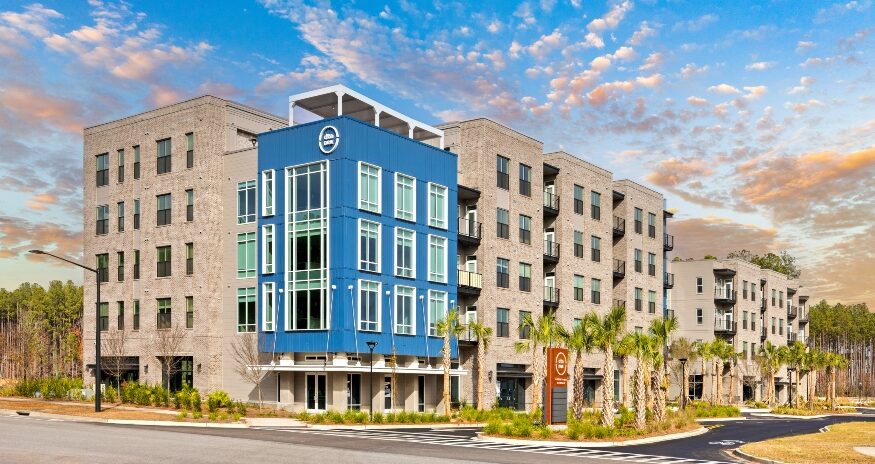
The homes of Downtown Nexton sit in one of the hottest real estate markets in fast-growing South Carolina. (Photo/Kevin Ruck)
The homes of Downtown Nexton sit in one of the hottest real estate markets in fast-growing South Carolina. (Photo/Kevin Ruck)
South Carolina housing growth reshapes real estate market
Hollie Moore // July 7, 2026//


- South Carolina’s rapid population growth continues to fuel higher home prices and reshape housing demand.
- Greenville Realtor Stan McCune says affordability has tightened as inventory remains constrained.
- Mixed-use developments such as Downtown Nexton are expanding to meet growing demand.
- Industry leaders say job growth, infrastructure and lifestyle continue attracting new residents to the state.
Stan McCune didn’t venture into the real estate business as most realtors do. Instead, he was working for a luxury ground transportation company, flipping houses in his free time.
After a while, people began coming to him for advice on flipping their own properties, sparking his realization that he might be good enough at flipping to make it into a career. A year later, he was a full-time Realtor.
At the time, the real estate market was a bit more affordable than it is today.
Going on 10 years in the real estate industry, McCune has observed the ebbs and flows of the market and the prices that have risen significantly in the past two years. He said favorable mortgage rates and the property tax structure have have historically made the state a more affordable option, even in high-dollar neighborhoods.
McCune said the market today is readjusting to the stability he saw when entering the industry, though it has endured struggles from low mortgage rates during the COVID-19 pandemic as well as the aftermath of Hurricane Helene in 2024.

Between 2020 and 2022, McCune said he saw the median price of a home in Greenville skyrocket from $200,000 to $300,000, an increase that had never moved so quickly before.
Despite its more affordable reputation, he said as people are reaching out to him now for homes in the Upstate, they are shocked by how expensive homes can be for a Southern state.
“People are surprised that Greenville is not more affordable than it is,” McCune said. “They are hearing all these things that the Carolinas are so cheap compared to some of these other areas, and that’s just not always the case.”
That pricing can be linked to the amount of population growth the state is seeing as a whole.
According to the 2023 Palmetto State Housing Study, between 2010 and 2021 South Carolina’s population increased 16.4%, high compared to the national average of 11.3%. Additionally, 90% of South Carolina’s population is located half of the 46 counties.
McCune said in a normal scenario, the influx of South Carolina’s house listings would bring prices down. Instead, prices are going up or remaining steady because so many people are relocating from different states to the Carolinas; it negates that typical gap.
“When I first began, I had one client that I helped buy 10 to 12 different homes for less than $60,000,” McCune said. “These homes weren’t yet livable at that price point, but you can’t find anything like that now.”
Not only are prices rising from demand, but the inventory is shrinking as a result of fewer people selling and moving. Many people purchased their house with a lower mortgage rate and aren’t willing to sell just to land in a potentially smaller, higher-rate home.
The counties predicted to have the most population growth between 2020 and 2030 are Berkeley, Horry and York counties.
In the past year Beaufort has seen the biggest increase in sales by roughly 8%. Greenville and Charleston areas remain the top two locations for homes sold in the state, averaging over 5,000 per year, according to the South Carolina Realtors.
In Berkeley County, the up-and-coming mixed-use community Nexton is a project nearly 10 years into creation. Similar to many others like it across the state and the country, Nexton is positioned to be a more affordable option with a live, work and play element all in the same community.
Tom Troy, president and director of Sharbell Development, a mixed-use developer based out of New Jersey, is the name behind Nexton Downtown. The project is intended to give a downtown experience of office, retail and residential space combined, something not as common in similar developments.
“We are not trying to replace Charleston, or take what makes Summerville, Summerville,” Troy said. “What we are trying to do is give people the same alternatives they would have if they lived in one of those places.”
Troy said a project like Downtown Nexton needs to be in an area that is scaling and actively expanding in infrastructure and people. He said he has seen the influx in other regions along the East Coast, like Charlotte, and is expecting Charleston to reach a similar level of demand.
Though arriving around the same time as the population surge, for McCune, the developments are just part of the state’s growth path. McCune said in his experience, people who are moving from other states are usually looking for a step-up home, a tier above a starter house, or a luxury home.
“One misconception people have is that all of these new developments are being driven by people moving here,” McCune said. “I don’t fully agree with that because most of those big developments are at entry level price points and that’s, generally speaking, not what the people moving here from out of state are looking to purchase.”
In addition to people aging and staying in their homes, there is also an influx in people over age 55 moving to South Carolina. According to the SC Housing study, the median age in the state has risen 2.4% since 2009, shifting the demographic the real estate and construction industries are serving.
In choosing to begin a project in the Lowcountry, Troy said his team prioritized the variety of lifestyle choices people have in the area and the vastness of age groups choosing to move for different purposes.
“It’s not a tremendously high cost-of-living state. Though nothing is cheap these days, it’s very attractive to people who are looking for entry-level housing to people who are pre-retired and retired,” Troy said. “The amount of new infrastructure, the amount of manufacturing and new jobs that have been established in South Carolina is a big driver.”
e