Sign In
Upcoming Event
 Free Newsletter

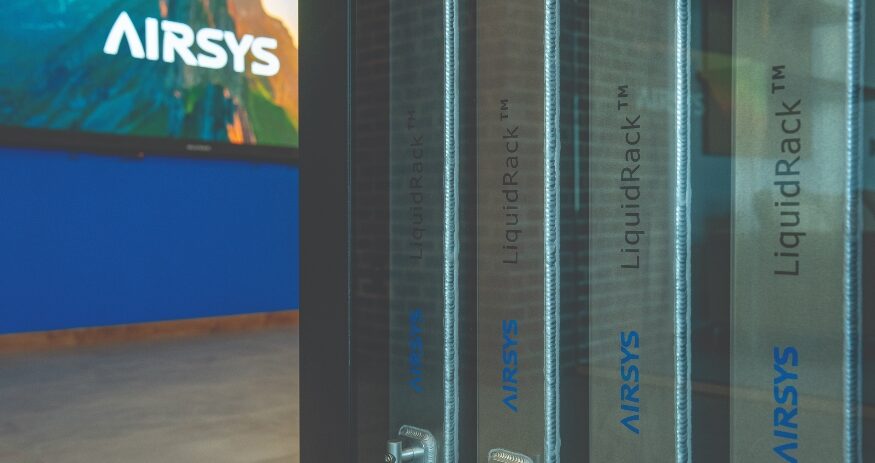
An Airsys cooling rack is designed to efficiently remove heat from high-performance data center servers using advanced liquid cooling technology. (Photo/Airsys)
An Airsys cooling rack is designed to efficiently remove heat from high-performance data center servers using advanced liquid cooling technology. (Photo/Airsys)
Airsys brings energy-saving data center cooling to Upstate
Christina Lee Knauss // July 29, 2026//


- Airsys invested $60 million in a new global headquarters and manufacturing campus in Woodruff.
- The facility will create 215 jobs and begin production in early 2027.
- The company’s liquid cooling technology reduces water use while capturing waste heat for reuse.
- Airsys leaders say sustainable cooling can help address community concerns over data center energy consumption.

Ever heard the phrase “energy cannot be created or destroyed, but it can change form?”
Anyone who has taken a physics class likely remembers that principle. It’s called the Law of Conservation of Energy, also known as the first law of thermodynamics.
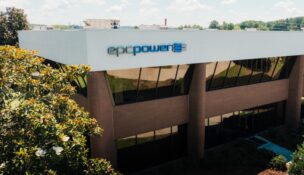
And it’s the concept at the foundation of Airsys, the company which in early May opened its $60 million manufacturing and global headquarters in the Upstate town of Woodruff. The new facility occupies a 60-acre campus at 101 Cool World Drive in Woodruff and is expected to bring 215 new jobs to the area.
Founded 30 years ago by Yunshui Chen, Airsys has become a global leader in cooling systems for medical equipment as well as mission-critical cooling systems for data centers, AI and other high-performing digital infrastructure.
The Woodruff site serves as the company’s global hub for its high-efficiency, zero-water cooling technologies, and when production begins in early 2027, it’s expected to become one of the largest 3-D printing manufacturing facilities in the world, using the versatile printers to make customizable spray liquid-cooling components for the high-density servers used at data centers.
The new facility’s opening also uniquely positions Airsys to take a lead in the ongoing discussion about data centers and the role they play in local communities.
Everybody knows they’re needed to power the constantly burgeoning AI infrastructure, but in the past few years data centers have also become a major bone of contention, with many communities pushing back against their construction because of noise, the amount of energy they consume, and the huge amounts of water they consume to cool servers.
The pushback has reached South Carolina, with some data center development proposals recently being struck down in places like Marion and Newberry counties.
Paul Quigley, chief strategic relations officer of Airsys and a member of the SC500, immediately brings up that physics class concept of energy changing form when he talks about the company’s work and its mission.
Quigley majored in English in college, but like many people ended up in a completely different career field — he entered the HVAC industry. Over the past 37 years, he’s worked in just about every facet of the industry from installation and design to manufacturing.
Now at Airsys, he’s at the helm of the company’s production of advanced liquid cooling systems that can transfer the waste heat from data centers and other high-use technologies and turn it into usable hot water for external facilities.
Can you explain the main premise behind what Airsys does involving data centers?
We need to remember that a data center is not just a building — it’s a system that receives and converts energy, and ultimately all of that produces a lot of heat. And you have less than five seconds to get rid of the heat. That’s why we call what we do mission-critical cooling. That defines what we do. We spend all of our time thinking about that energy, how it moves through the data center, how much of it is consumed by the support infrastructure and what happens to the heat afterwards. We don’t see Airsys as a cooling company, but rather as an energy movement and management company.
In a data center the real job is heat removal, because all those chips move a ton of heat. Many data centers use water to cool the chip and reject the heat outside, but the better model is to manage that heat intentionally. And to us, heat is energy. We recover the heat so it can be used elsewhere.
What is more sustainable and efficient about the process?
In older data centers, we’d use air to remove heat, and now each one of the servers in these centers is so powerful that air is no longer effective — it just can’t do it. And data centers were using so much energy, so much power just to cool servers that the question became how much power can they pull from the grid? We discovered it’s a lot more effective to use liquid to cool the servers. We use highly refined synthetic vegetable oil — not the kind you cook with — purchased from multiple vendors, and we use them to make something called dielectric fluids that are put into the servers to cool the chips. The fluids don’t conduct electricity — they conduct heat. And we work to find a way to take the heat removed from the facility and convert it into something else, energy that can be used elsewhere.
What brought Airsys to South Carolina and to Woodruff?
Our CEO and founder is Chinese — he was at the protests in Tiananmen Square, and he came to the United States — his story is a genuine American immigration story. Airsys originally moved into California and started with humble beginnings, and it’s taken time to grow into what it is today. The founder traveled a lot and came to South Carolina and liked the culture, the people and the honesty. The decision wasn’t about manufacturing, not about cooling, it was about people. And along with the culture, the Upstate was perfect in terms of infrastructure and logistics.
What role do you see Airsys playing in the ongoing debate about data centers and energy?
I think of it in terms of we’re stewards of an ancient gift — every bit of energy is 13 billion years old. Every bit of energy in the world dates back to the Big Bang. Anytime you plug your phone in, you’re using something that’s ancient. We’re proud of communities that are standing up to the data center companies and saying you have to do better. We need to think like stewards.
What we do is convert the energy pulled from the data centers into something else. In areas where the weather is cold, you can turn it into heat. But we’re also looking at areas like Orlando, Florida, where it’s hot all year round. Resorts there like Universal Studios have massive data centers that run constantly to run all of the rides, the displays, and serve the people in the hotels. Right now all of the heat that data center generates is getting blown up into the air. There’s a smarter way to release that energy from the data centers and turn it into thermal energy, and we have everything necessary to reduce that transmission by about 90%.
Simultaneously, these resorts have tons of hotels where it’s estimated that each guest uses 400 gallons of hot water, and they use gas boilers to heat that water. The heat from data centers can be recycled and used to heat the water in these resorts. They’re already doing something similar at the University of Notre Dame in Indiana, using an underground network to capture heat from campus servers. Something similar could be done at Clemson University or other universities which all have their own data centers. The heat could be used in dormitories. The same concept could also be used at hospitals which all have their own data centers and also need a staggering amount of hot water. There are tons of applications out there where this concept can be used. We’re part of the solution to this question of how to deal with the issue of energy consumption.
l