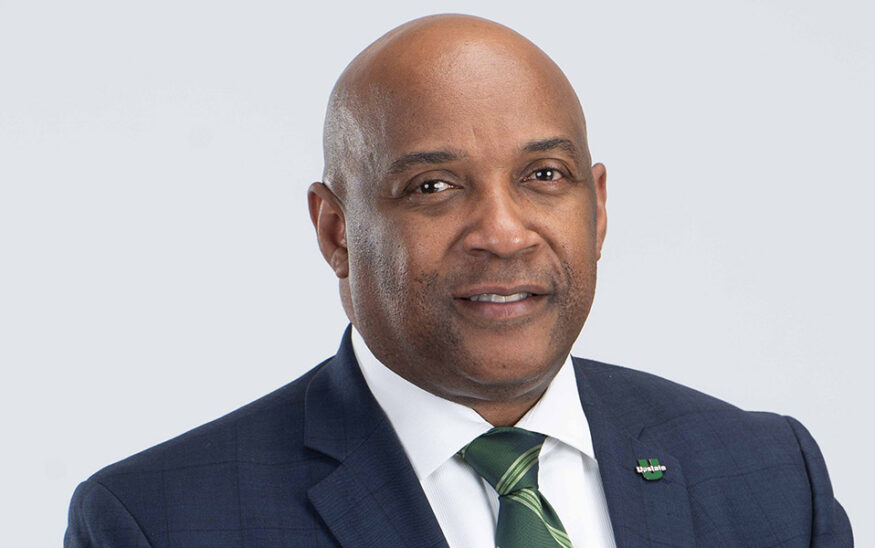
Chancellor
University of South Carolina Upstate
How do you feel South Carolina colleges and universities are preparing students to meet the state’s future workforce needs?
Historically, higher education was built for the elite, often with little regard for practical, hands-on skills. Over time, the pendulum has swung between purely academic and strictly career-focused models. At USC Upstate, we’ve always believed in the power of balance. Since our founding in 1967, we’ve been blending academic rigor with real-world relevance, and we’ve been refining that approach every year.
We’re working hand in hand with Upstate industry partners across all sectors to make sure our curriculum is current, credentialing is relevant, and graduates are ready to meet the region’s evolving workforce needs. To that end, we’ve co-convened events like the Upstate Talent Forum, which brings together educational institutions and business leaders to look at how we can all address the critical issues of talent development and workforce alignment. Our goal is to create a robust pipeline of skilled professionals who can drive innovation and economic prosperity in the Upstate region.
At USC Upstate, we’re focused on both technical proficiency and softer skills like communication, critical thinking, and leadership so that our graduates can adapt as the workforce evolves. We also emphasize internships, clinical experiences, and applied research, ensuring our students leave with knowledge and with experience. I’m excited about our work in integrating AI and other forms of technological innovations across the curriculum, institutional operations, and administration of the University. This applied-learning model is essential to fulfilling our role as an engine of regional economic mobility.
How is your institution preparing for the looming drop in traditional college-age students and the so-called “enrollment cliff?”
This is a serious challenge for institutions of higher education that have traditionally relied on a steady stream of high school graduates. At USC Upstate, we are trying several strategies, including targeting audiences like adult learners, military-connected students, and transfer students. These more non-traditional groups have great potential.
We’re also exploring flexible-learning pathways and other ideas to help us meet potential students where they are. We also recognize the importance of retaining current students, helping them stay, succeed, and graduate. So we’re offering enhanced academic advising, financial literacy programs, and more mental-health support.
Additionally, we’re partnering with K-12 systems and technical colleges to smooth the road for potential students and create seamless transfer opportunities.
Collaboration is central to our culture. Through partnerships with OneSpartanburg Inc’s ReDegree Initiative and the Spartanburg Academic Movement’s Movement 2030, we can support outreach to over 50,000 Spartanburg County residents with incomplete degrees. Since launching last year at USC Upstate, we’ve reengaged more than 30 students and graduated at least 10.
What can be done to counteract government funding cuts and reduced federal research grants?
To offset reductions in traditional funding streams, institutions must be proactive and entrepreneurial. This includes diversifying revenue through public-private partnerships, expanding continuing education and professional development offerings, and leveraging university assets, such as real estate, intellectual property, and expertise.
Philanthropy plays a crucial role by boosting alumni engagement, corporate giving, and foundation support, which help institutions stay mission-focused during financial challenges. Last year, we secured a $4.9-million grant for humanities internships and a $2-million grant for nursing scholarships, both from private funders who share our commitment to providing affordable, experiential education.
At the same time, institutions must demonstrate their value through workforce impact, social mobility metrics, and community contributions. By doing so, we make a stronger case for private investment as well as public reinvestment in higher education as a public good.
What is your institution’s strategy in addressing the increased integration of artificial intelligence and automation and the expansion of online and hybrid learning models?
Recently, I visited the New York headquarters of OpenAI, the creator of ChatGPT, to see how tools like these can help institutions like the University of South Carolina Upstate work more efficiently and effectively.
That visit gave me a deeper understanding of AI’s capabilities and limitations, as well the need to use AI thoughtfully and wisely. As we actively expand our online degree programs and hybrid-learning models, we must adapt quickly to the challenges posed by face-to-face instruction in this new frontier. Clearly, the pace of artificial intelligence is significantly impacting teaching and learning.
There are ethical concerns to think about with AI, of course. AI-based platforms show inherent gender and racial biases, and maybe other biases, which is understandable as the volume of data used comes from existing data. AI also impacts the environment by consuming a significant amount of water and power.
We must also remember that while well-funded schools are equipping students to use AI not as a cheat code but as a complement to traditional studies, underfunded institutions struggle with limited internet infrastructure, lack of teacher training, outdated hardware, and less focus on AI literacy. More needs to be done to address these inequities.
There are many beneficial applications of AI in education. These include automated assessment systems for teachers, personalized learning platforms, AI bots that support student success, and the use of AI in institutional administration and operations.
All of these tools can help regional comprehensive universities like ours offer students a fulfilling education that aligns with the needs of employers.
According to the World Economic Forum’s Future of Jobs Report 2023, 75 percent of companies are expected to adopt AI technologies in some form over the next five years—a move that 50 percent of organizations say will create job growth.
At USC Upstate, we’re integrating AI literacy into curricula across disciplines. We’re also committed to partnerships that enhance access and support faculty in adopting technology thoughtfully. Recently, we purchased more than 5,000 OpenAI.edu licenses for our students and employees to amplify our work and commitment to the integration of AI at USC Upstate. We are already active users of Microsoft 360, Co-pilot, ChatGPT, and other AI tools that help us with enrollment management, operations, student services, and academics. We’re testing AI-operated lawn mowers and other equipment to help the university operate even more efficiently.
What is something people might be surprised to know about you?
I grew up on a small cotton farm in the Mississippi Delta. When I was eight years old, I started my own garden, growing vegetables like peas, butter beans, tomatoes, cucumbers, and onions. I sold these at the market or on the side of a busy road in town, using the money I earned to buy my school supplies and clothes. At that time, it didn’t feel like work; it was more like fun, owning my own business and making my own money. And I was accompanied by my Dad. For those wondering, it wasn’t called child labor during that time—people saw it as just raising your son to appreciate the connection between work and financial reward.
Recently, my niece, Kayla Turner Thomas, debuted a documentary called “Farming Freedom.” The film tells the story of my grandfather, John Harris, through the lens of my father, Henry L. Harris, and his quest for landownership in Mississippi. For more information about the documentary, please visit [https://filmfreeway.com/FarmingFreedom].

 Sign In
 Free Newsletter