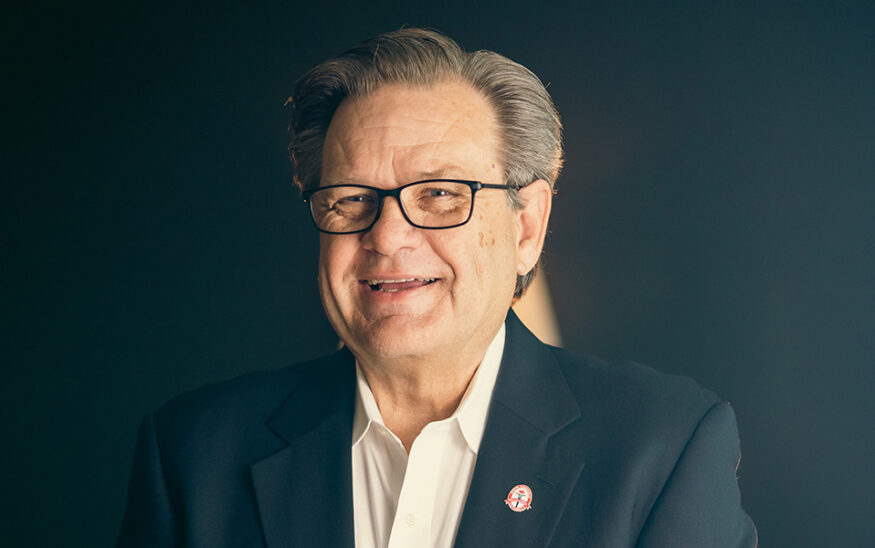
President & CEO
North Greenville University
How do you feel South Carolina colleges and universities are preparing students to meet the state’s future workforce needs?
South Carolina is uniquely positioned because of our vibrant economy, our state’s distinctive belief in hard work, and the alignment of our public universities, technical colleges, and independent institutions’ values and dedication to first-generation students. The Palmetto State values relationships, which means our institutions are attenuated to the needs of our local communities and regions. Workforce profiles are highly volatile, which is why we equip students with transcendent but applicable skills: critical thinking, effective communication, collaborative proficiency, and ethical decision-making. We are preparing life-long learners who are adaptive to the kinds of career changes the future will unfold.
How is your institution preparing for the looming drop in traditional college-age students and the so-called “enrollment cliff?”
North Greenville operates with no long-term, interest-bearing debt, allowing us to manage our traditional student enrollment in a distinctive way, keeping scholarships strong and working hard to keep student loan debt as low as possible. Additionally, we are laser-focused on our mission of ‘equipping transformational leaders for church and society,’ which is powerfully attractive to students and their families. We are keeping level enrollment in the traditional sector but growing rapidly in graduate and non-traditional programming, which are burgeoning opportunities in our state.
What can be done to counteract government funding cuts and reduced federal research grants?
By design, NGU does not accept federal research grant funding, so we are not impacted by those cuts. Government funding flows to our students and their families and these individuals use these funds to pay their tuition, so cuts in aid are first and foremost cuts to students. We are deeply grateful for our many donors who provide private scholarship funds to help deserving students—especially those who are the first in their families to complete degrees.
What is your institution’s strategy in addressing the increased integration of artificial intelligence and automation and the expansion of online and hybrid learning models?
While AI is impacting the educational process, the reality is that synthetic automation programs like this are here to stay and will be to the next decade what personal computers and the internet were a few decades ago. NGU is working already to incorporate emerging tools in our operations to improve our efficiency, even as we work hard to make sure that our educational philosophy and pedagogical tools are ethical, practical, and prepare students to lead productive lives in the coming decades. I’ll add that as a Christ-first institution, we are deeply interested in helping students to think about the ethical and spiritual impact technology has on our lives.
What is something people might be surprised to know about you?
My first apartment was a gardener’s cottage on an actual Polish count’s estate on the Chesapeake Bay in Virginia: it was straight out of “The Great Gatsby!”

 Sign In
 Free Newsletter