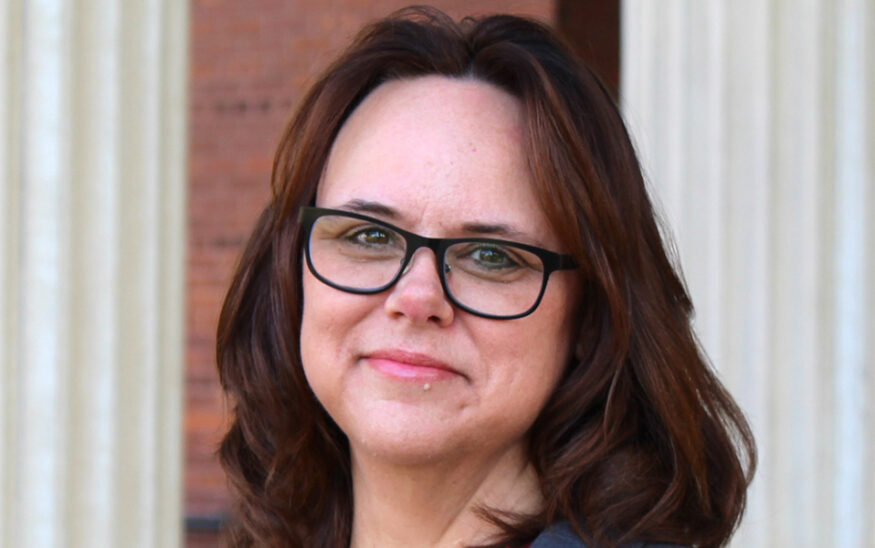
Vice President for Academic Affairs
Newberry College
How do you feel South Carolina colleges and universities are preparing students to meet the state’s future workforce needs?
South Carolina colleges and universities are preparing students to meet the state’s future workforce needs in a myriad of meaningful ways. Newberry College is a liberal arts institution, which means that we place a great deal of emphasis on students learning to communicate, to examine the world from multiple perspectives, and to solve complex problems. We are producing graduates who are prepared not just for their first job out of college, but for all of the jobs they will have during their working lives. People who are adaptable, who communicate well, who know how to think critically, and know how to work effectively with others will always have a path forward and upward in the workforce. How many of us have the same job we did at the age of 22? How many of us have jobs in industries or sectors that didn’t even exist when we were 22? Our graduates are prepared to face the future because they have a solid grounding not only in their academic fields, but in the skills that all employers value.
How is your institution preparing for the looming drop in traditional college-age students and the so-called “enrollment cliff?”
Newberry College is preparing for the “enrollment cliff” by expanding our offerings of online programs. There are millions of South Carolinians with some college credits but no degree. Most of those people are now adults with families and jobs. Returning to campus to sit in a classroom with 18-22 year old students is no longer part of the plan. But we have a number of online programs that are designed for adult learners. We have online Business, Psychology, and Criminal Justice degrees. n the health care field we have a program where students with RN licensure can earn a BS degree in Nursing, and a BS degree in Respiratory Therapy that builds on an associate’s degree in that field. We have options in which students can either start a new degree, pick up where they left off and finish the degree they previously started, or complete a bachelor’s degree after earning an associate’s degree. All of these options allow our graduates greater opportunities in the workforce. Our online programs are affordable and efficient and are designed for adult learners.
What can be done to counteract government funding cuts and reduced federal research grants?
We, like all of higher education, are dismayed by government funding cuts to colleges and universities, as well as reduced federal research grants. I think we in higher education have a duty to inform our elected officials of the important work we are doing to produce the skilled workforce of tomorrow. We also need to work with families to get the unequivocal message to those elected officials that those federal dollars equal opportunity for the vast majority of Americans. Most of the population cannot simply afford to write a check for a college education, and the loans and grants are critical not only to the future of every individual who wants to pursue higher education and the generations that come after them, but also to the future of the country. One avenue I would like to pursue to counteract the reduction in funding from the federal government is to forge meaningful relationships with industry. Partnerships have the potential to benefit both businesses and the higher education community. While there is always a great appreciation for philanthropic gifts from industry partners, there are also other ways businesses, nonprofits, and state agencies can engage in meaningful ways with those of us in higher education. Paid internships, apprenticeships, and co-operative programs hosted by businesses give students an important lens into the industry and give those businesses a chance to evaluate students for future job opportunities. Colleges and universities also routinely employ business leaders as part-time instructors to ensure that students are getting the best, most up-to-date industry information.
What is your institution’s strategy in addressing the increased integration of artificial intelligence and automation and the expansion of online and hybrid learning models?
If we in higher education do not embrace artificial intelligence we are doing ourselves and our students an inexcusable disservice. I use AI every day in my job, and that will be the expectation of every graduate who enters the workforce. Whether we look at generative AI or machine learning, users or authors, knowledge of AI and its uses and limitations is critical knowledge in today’s workforce. This is one of my major initiatives this year. I want every student who matriculates through Newberry College to have exposure to AI in multiple forms and in multiple classes during their time here. That means faculty need to embrace AI as well. Some faculty have only seen the “down” side of AI, where a student uses a prompt in generative AI to engage in academic dishonesty. It’s well past time for us to learn how AI works and to start teaching our students how it can be used appropriately and well.
What is something people might be surprised to know about you?
I used to be so cool. I am a geologist by training, and my specific fields of interest are volcanoes and earthquakes. The week after I graduated from Baylor University with my bachelor’s degree, I jetted off to Hawaii to serve as an intern with the Hawaiian Volcano Observatory. I also studied the active volcano Kilauea in Hawaii for my dissertation. As a faculty member, I took about 15 groups of students to Hawaii to study its geology, geography, culture, and history. I taught at Tarleton State University in Texas, and many of my students were raised in small towns, often on ranches. To see them immersed in another culture and learning about environments so different from the ones they came from was always so much fun. I no longer had the opportunity to continue these field trips when I moved into administrative roles, but I’d love to start leading groups there again.

 Sign In
 Free Newsletter