Sign In
Upcoming Event
 Free Newsletter

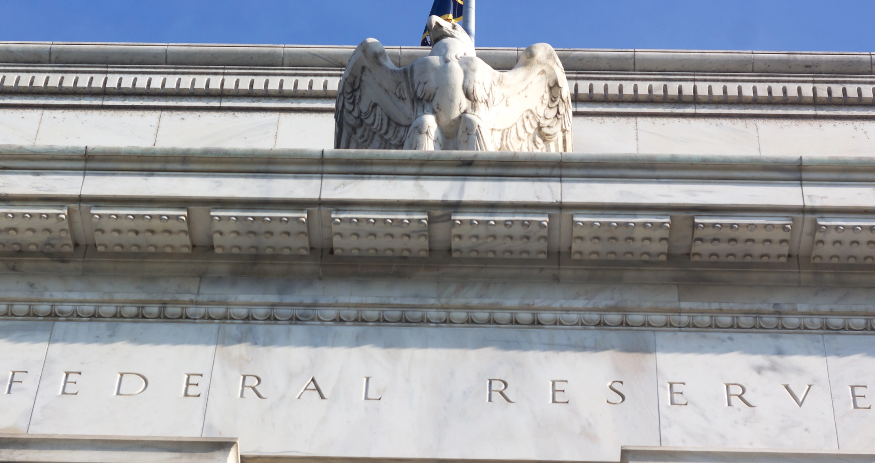
July payroll employment declined while the unemployment rate fell to 4.1%, reflecting a shrinking labor force and continued productivity gains. (Photo/DepositPhotos)
July payroll employment declined while the unemployment rate fell to 4.1%, reflecting a shrinking labor force and continued productivity gains. (Photo/DepositPhotos)
Where did all the workers go?
Ross Norton // August 10, 2026//


- U.S. payroll employment declined by 23,000 in July, far below the expected gain of about 80,000.
- The unemployment rate fell to 4.1%, below the Federal Reserve‘s 4.2% full-employment threshold.
- Labor productivity increased 2.2% over the past year, well above its pre-COVID average.
- The Federal Reserve faces pressure to address 2.6% core inflation while weighing when to raise interest rates.
 The Bureau of Labor Statistics reported that payroll employment declined 23,000 in July. That was totally unexpected. At the same time the unemployment rate declined 0.1% to 4.1%.
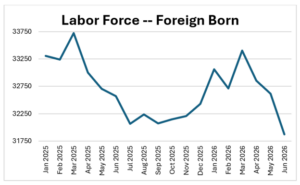
These somewhat surprising results came about because the foreign-born labor force has been shrinking steadily. When the economy no longer has to provide jobs for a steady stream of workers entering the country, it is easy to maintain a low unemployment rate.
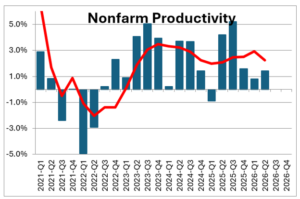
With virtually no growth in the labor force the economy needs steady gains in productivity to keep GDP climbing. That is exactly what is happening. In the past year productivity has grown at a 2.2% pace which far exceeds the 1.2% growth rate registered in the 10 years prior to the COVID recession.
Our guess is that productivity will continue to climb at a steamy pace for years to come as the AI buildout continues. That still leaves the Fed with an inflation problem. In our opinion, higher rates are coming but the first rate hike may not occur until December.
The economy needs somewhat higher interest rates now, but the November election could play a role in the timing of its first move. The next FOMC gathering is Sept. 15-16. But that is getting close to the election in early November. The Fed would prefer not to be a factor in the outcome of any election so it may hold off on raising rates until its meeting on Dec. 8-9.
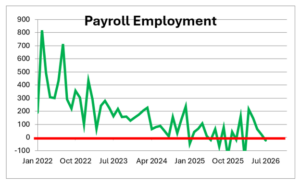
Payroll employment declined 23,000 in July. The market had expected an increase of about 80,000. In addition to the July shortfall in jobs the BLS revised downward the employment gains in May and June by 66,000 0 and 37,000, respectively. Instead of growing by about 80,000 per month, payroll employment is climbing by a relatively stagnant 20,000 monthly. Part of the shortfall was attributable to a decline of 57,000 local government workers — presumably teachers. That decline may well be reversed in the next couple of months as school reopens in the fall.
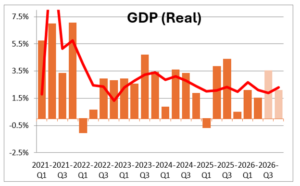
Ordinarily the decline in employment in July and downward revisions in jobs to those two earlier months would cause economists to revise downward their estimates of third quarter GDP growth sharply. We are not changing our current projected 3.5% GDP growth rate for that quarter.
It is steamy not because of robust employment growth, but because of likely snapbacks in the inventories and trade components which combined subtracted 1.7% from GDP growth in the second quarter. If we end up with 1.5% GDP growth in the second quarter and 3.5% in the third quarter, but both growth rates are distorted in opposite directions by those two components, average growth for the two quarters combined of 2.5% seems roughly in line with the current trend rate.
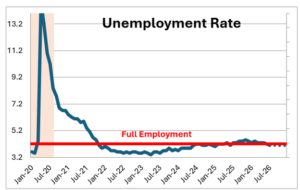
Despite the smaller gains in payroll employment it is hard to argue that the labor market has softened because the unemployment rate fell another 0.1% in July to 4.1% after declining 0.1% in May. The Fed thinks that the full employment threshold is 4.2% which means that at that level of the unemployment rate everybody who wants a job has one.
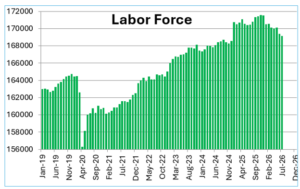
Why is it that the unemployment rate is falling? It is because the labor force is shrinking. After years of growing steadily as foreigners came to America seeking higher payer jobs than were available in their home country, the labor force has begun to decline. In fact, it has fallen by 500,000 workers (not seasonally adjusted) since the end of last year.
During that period of time 900,000 foreign born workers have left the labor force. They were either deported or chose to leave voluntarily. At the same time native born workers have risen by 400,000. As a result of all this, the economy needs to provide fewer jobs to keep the unemployment rate steady. As shown in the chart above, the unemployment rate has changed very little thus far in 2026.
Intuitively, smaller employment gains should be a sign of emerging labor market weakness. But that is not necessarily the case. The economy continues to provide enough jobs for all workers that are actively seeking employment.
There was another encouraging piece of news that became available this past week — rapid growth in productivity. The BLS reported that productivity has risen 2.2% in the past year. This is a full percentage point faster than the 1.2% average increase in the 10-year period leading up to the 2020 COVID recession. This is AI in action. Firms are able to maintain output with fewer workers by using artificial intelligence to boost productivity. The widespread build out of AI is just in its infancy. It will likely boost productivity and GDP growth to 2.5-3.0% for the foreseeable future.
On the inflation front the Fed still has a problem. The core personal consumption expenditures deflator has risen 2.6% in the past year and has been quite steady in recent months. We expect it to rise at about that same pace by the end of this year.
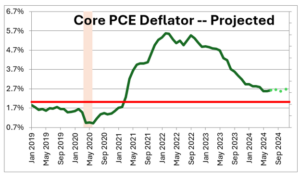
If you were a Fed official what would you do in September? GDP growth in the third quarter may be steamy at 3.5%, the unemployment rate very low at 4.1%, and the targeted inflation rate steady at 2.6% which is considerably faster than the desired 2.0% pace.
Three Fed officials wanted to raise rates at the most recent meeting in July. Is this situation sufficient to entice a few more of their colleagues to raise rates in September? Maybe. The economic outlook certainly seems to warrant a rate hike. But we wonder if the political situation with the mid-term election looming on Nov. 3 causes the Fed to delay its first rate hike until December. The problem with that outcome is that Fed Chair Warsh has emphatically stated that he intends to get inflation back to 2.0%. But yet, in his first Fed meetings as Fed chief he has dithered and found one excuse after another not to raise rates.
We think the Fed will probably delay that first rate hike until December. But we also think that it should have done so last month. If Warsh wants to maintain his credibility he and his colleagues need to act soon.
From 1980 until his retirement in 2003, Stephen Slifer served as chief U.S. economist for Lehman Brothers in New York City, directing the firm’s U.S. economics group while also being responsible for forecasts and analysis of the U.S. economy. He has written two books on using economic indicators to forecast financial markets and previously served as a senior economist at the Board of Governors of the Federal Reserve in Washington, D.C. Slifer can be reached at www.numbernomics.com.
i