Sign In
Upcoming Event
 Free Newsletter

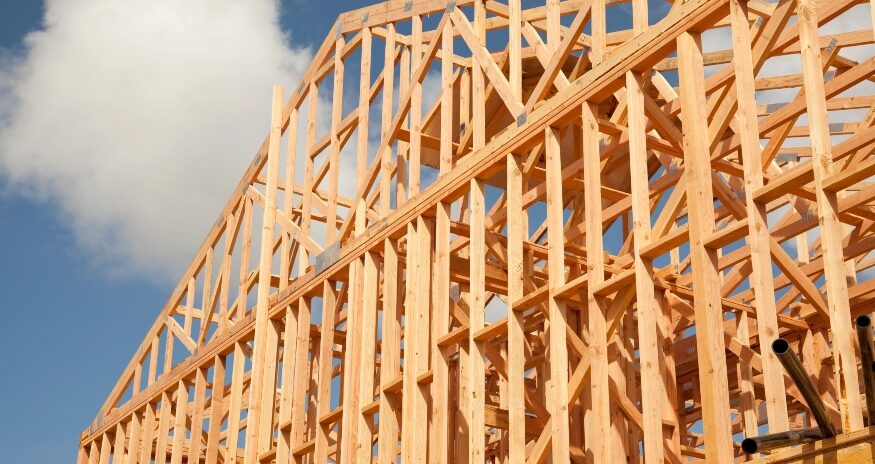
High home prices and mortgage rates continue to weigh on the housing market, but improving affordability and new federal housing legislation could support a gradual recovery. (Photo/DepositPhotos)
High home prices and mortgage rates continue to weigh on the housing market, but improving affordability and new federal housing legislation could support a gradual recovery. (Photo/DepositPhotos)
Housing — the struggle continues
Stephen Slifer // July 22, 2026//


- High home prices, elevated mortgage rates and rising insurance costs continue to limit housing affordability.
- First-time homebuyers face additional barriers from student loan debt and a limited supply of homes.
- Lower inflation, declining mortgage rates and stronger job growth could gradually improve affordability.
- The 21st Century ROAD to Housing Act aims to increase housing supply and support more affordable homeownership.
The economy seems to be chugging along at a respectable pace. The consumer continues to spend at moderate pace. With the buildout of artificial intelligence, investment spending is soaring.
The one sector that is struggling is housing. Between the increase in house prices, the rise in mortgage rates, and the cost of insurance, younger buyers have been largely priced out of the market. In addition, many of them are saddled with student loan debt which reduces the amount of money available to spend on housing.
As a result, many of them are living with their parents far longer than usual because they cannot afford to do otherwise. But despite these challenges, the longer-run outlook is improving.
The economy is once again creating jobs which will boost income. If Fed Chair Warsh and his colleagues are serious about reducing inflation to the 2.0% target, the 30-year mortgage rate will fall. The recently enacted ROADS bill should help builders construct more affordable housing and provide assistance to first-time buyers.
But how much and how soon? There may be some slight improvement prior to yearend, but it is hard to see a vibrant housing sector until 2027.
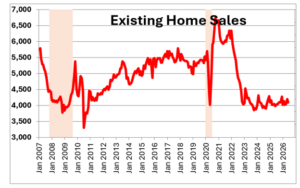
Home sales have been in a slump for four years. Sales plunged in 2022 as home prices soared and mortgage rates doubled from 3.0% prior to the recession to more than 6.0%. The current level of existing home sales is roughly where it was in the dark days of the so-called “Great Recession” in 2008-2009.
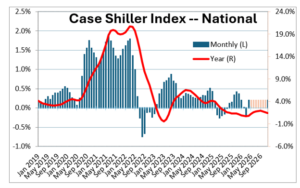
During that period of time home prices soared. Once the brief 2020 recession ended in April 2020 home prices began to climb by 1.5% per month for almost two years. That resulted in an annual increase in home prices of almost 20% in 2021 and 2022. Since then home prices simply grew more slowly. They have never declined by any appreciable amount.
As inflation soared the Federal Reserve was slow to combat it. It believed that the price runup would be temporary. It wasn’t. The Fed finally recognized the error of its ways about 1-1/2 years too late. It then pushed short-term interest rates sharply higher. In the process the 30-year mortgage rate doubled from 3.0% prior to the recession to more than 6.0%.
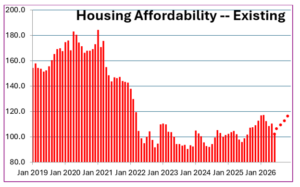
Not surprisingly, housing affordability plunged. Prior to the recession a median income earning family had 70% more income than they required for the purchase of a median-priced home. Today that same median income earning family has barely enough income to qualify.
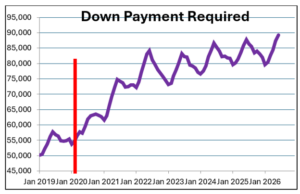
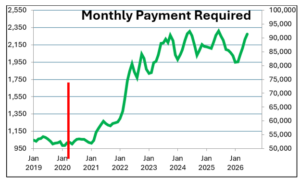
The down payment required to purchase such a home has jumped from $55,000 prior to the recession to $90,000. The monthly payment for that median-priced home has doubled from $1,000 to $2,300.
On top of the principal and interest payment buyers are also struggling with a surge in the price of homeowners insurance which reflects the huge payouts by insurance providers who have been hit with a seemingly endless stream of natural disasters in the form of wildfires, flooding, tornados and hurricanes.
As a result, many first-time home buyers have been priced out of the market. The National Association of Realtors reports that the share of first-time buyers has fallen from 40% in 2007 to a record low of 21% in 2025.
The problem is compounded by the fact that there is a shortage of homes available to sell. Realtors cannot sell a property that is not on the market. As mortgage rates climbed from 3.0% to more than 6.0%, homeowners who in ordinary circumstances might have been inclined to sell chose to stay put.
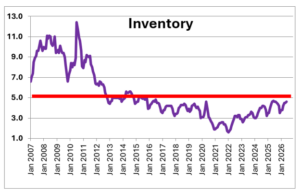
Who wants to trade a 3.0% mortgage rate for a 6.0% rate? The inventory of homes available for sales fell to a record low of about 2.0 months. Realtors suggest that a 5.0-month supply is required to balance demand and supply. Even if a family wanted to purchase a home they would have been largely unable to find one that satisfied their needs.
And if that were not enough, many of these potential first-time homebuyers — many of whom are under 30 years of age — are saddled with student loans. For them, the additional burden of a 30-year mortgage is simply not possible. As a result, they are staying in school longer, choosing to live with their parents for a longer than normal period of time, and perhaps delaying marriage and postponing childbearing.
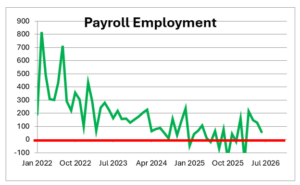
Despite this long laundry list of headwinds, the outlook seems a bit more positive. First of all, the economy is once again creating jobs. Jobs boost income which should help these younger adults afford their initial home purchase.
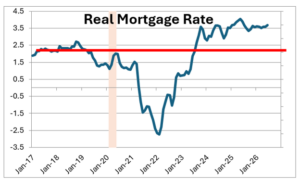
If the Fed is successful in reining in the core personal consumption expenditures inflation rate from 3.0% currently to 2.0%, mortgage rates could drop back to about 5.5%. The real mortgage rate today is about 3.5% (6.5% mortgage rate minus 3.0% inflation). Its historical average is about 2.5%. Mortgage rates are never returning to the 3.0% pre-recession rate, but falling from 6.5% today to 5.5% would undoubtedly help.
Finally, home prices should remain flat or even decline somewhat in the months ahead. Homeowners who already have their home on the market are slowly marking down the price. Builders are also cutting prices and offering incentives. But countering these price reducing initiatives, the shortage of available homes on the market is preventing home prices from falling very much. These two conflicting dynamics have caused the Case Shiller national price index to edge upward by just 1.2% in the past year (see chart above).
With an acceleration of consumer income growth, somewhat lower mortgage rates, and steady or even slightly declining home prices, housing affordability should increase in the months ahead. By yearend a median income earning family which currently has just enough income to qualify for the purchase of a median-priced home should have about 17% more income than required. That should help.
Finally, the “21st Century ROAD to Housing Act” which took effect on July 11 is designed to increase the supply of housing, streamline regulations, and restrict large institutional investors from buying single-family homes.
For example, large institutional buyers are now prevented from bulk purchasing of additional single-family homes. There are grant programs to convert vacant factories, warehouses, office buildings and strip malls into mixed-income or attainable housing. It has provisions to streamline the environmental review processes to accelerate affordable housing development.
It removes a HUD requirement that manufactured housing be constructed with a permanent chassis which should reduce the cost of producing modular housing. For the first time in decades the federal government is choosing to partner with local governments to address the nation’s deficit of millions of housing units.
The housing market has been a disappointment in the first half of the year as potential buyers remain on the sidelines. But by yearend green shoots of a moderate rebound in housing should be apparent.
From 1980 until his retirement in 2003, Stephen Slifer served as chief U.S. economist for Lehman Brothers in New York City, directing the firm’s U.S. economics group while also being responsible for forecasts and analysis of the U.S. economy. He has written two books on using economic indicators to forecast financial markets and previously served as a senior economist at the Board of Governors of the Federal Reserve in Washington, D.C. Slifer can be reached at www.numbernomics.com.
r